
The arrival of the railroad in Baca County in 1926 changed the possibilities for the county’s growing broomcorn industry. Distance had long been one of the greatest obstacles facing farmers on the isolated southeastern Colorado plains. Broomcorn might command a good price in distant markets, but getting bulky bales to those markets was another matter. The railroad shortened that distance economically, if not geographically, connecting Baca County growers with buyers and manufacturers hundreds of miles away.
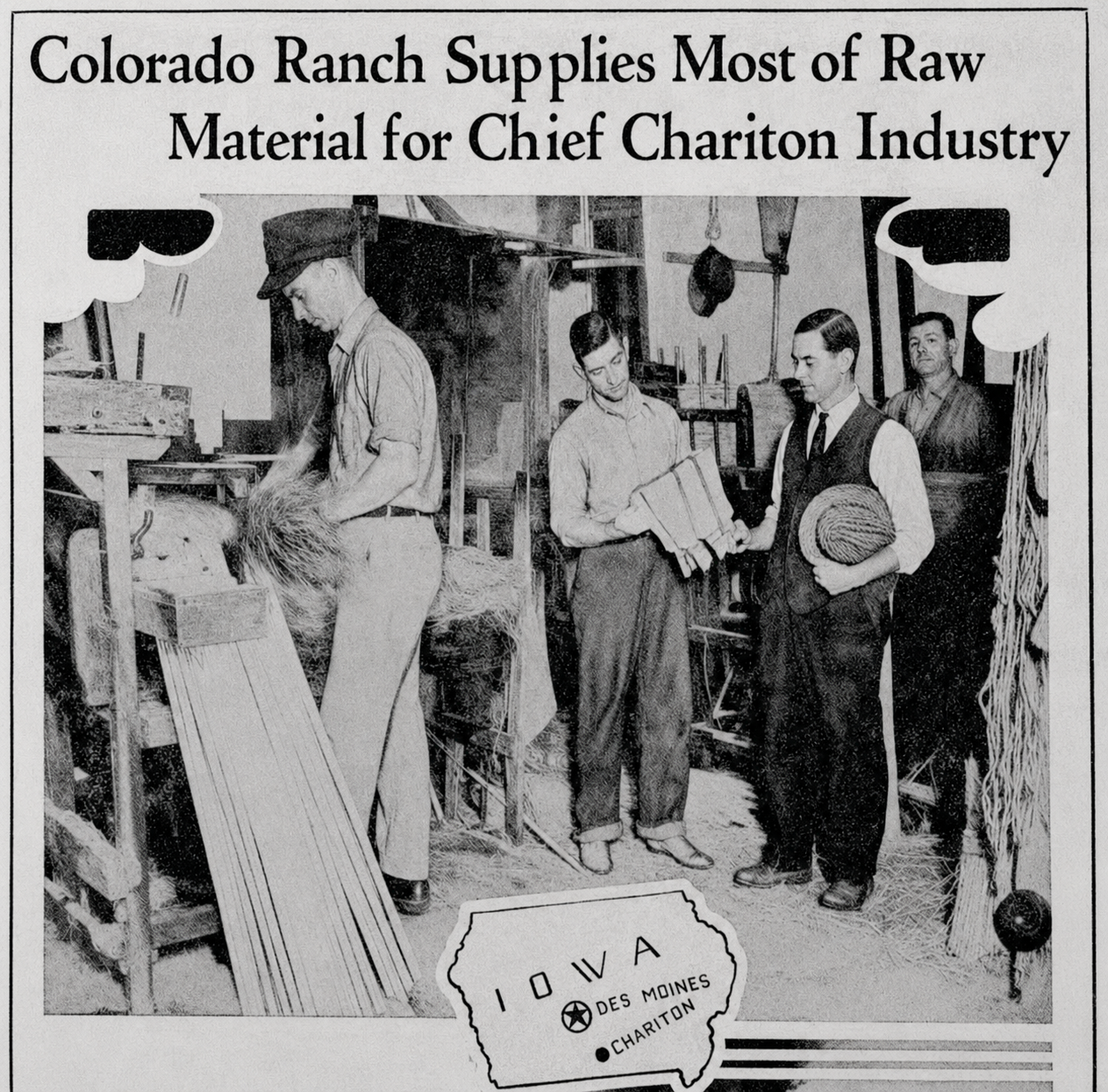
Only five years after the railroad arrived, evidence of that connection appeared more than 600 miles away. On June 16, 1931, the Des Moines Tribune reported on the industries of Chariton, Iowa, where the town’s leading business depended heavily upon broomcorn arriving from Baca County. According to the newspaper, “railroad car after railroad car”traveled annually from Baca County to Chariton, carrying the raw material needed to keep the town’s broom factory operating.¹

The destination was the J. H. Curtis and Son broom factory, a family business that had operated in Chariton since 1884. By 1931, the company was doing between $45,000 and $48,000 worth of business annually, producing three grades of household brooms as well as whisk brooms and children’s toy brooms.
Some of the factory’s broomcorn was grown in Iowa, but the Tribune reported that the larger portion came from Colorado. Even more significant, the Curtis family was not simply purchasing Baca County broomcorn from local growers. J. H. Curtis owned a broomcorn ranch in Baca County that supplied much of the raw material for his Iowa factory.

The arrangement illustrates how quickly the railroad helped integrate Baca County into a much larger broomcorn economy. Just five years after rail service reached the county, broomcorn grown on the southeastern Colorado plains was moving by the carload to a manufacturer in Iowa. A crop could be harvested and baled in Baca County, hauled to the railroad, loaded into a boxcar, and transported hundreds of miles to a factory where it became a finished product sold to American consumers.
The railroad did not create Baca County’s broomcorn industry, nor did it make the county any less remote. What it did was make that remoteness less important. By 1931, “railroad car after railroad car” of Baca County broomcorn heading to Iowa provided tangible evidence that the rails had connected the county’s fields to a national manufacturing economy.

Want to learn more about Old Boston Colorado? Find it and our other titles on Amazon:


Leave a Reply
You must be logged in to post a comment.